
Introduction
We spend our lives building wealth—saving, investing, and planning for the future. But what happens to those assets when it’s time to transfer them to the next generation? This is where a grantor trust becomes one of the most powerful tools in estate planning.
A grantor trust is a legal arrangement that allows the person who creates the trust—the grantor—to retain certain rights or powers over the trust assets while still receiving specific tax advantages. It’s widely used by high-net-worth families, entrepreneurs, and investors who want to pass wealth efficiently while maintaining some control.
At first glance, trusts can feel intimidating. Legal terms, tax rules, and estate laws can seem overwhelming. However, once you understand how a grantor trust works, it becomes clear why financial planners, attorneys, and tax experts often recommend it as a cornerstone of long-term wealth strategy.
In this guide, we’ll break down everything you need to know—from how a grantor trust works to its tax implications, benefits, and real-world applications.
What Is a Grantor Trust?
A grantor trust is a trust in which the person who establishes the trust retains certain powers or benefits, making them responsible for paying income taxes on the trust’s earnings.
Under U.S. tax law, specifically the Internal Revenue Code Sections 671–679, the IRS treats the grantor as the owner of the trust’s assets for income tax purposes.
Simple Definition
A grantor trust is a trust where the creator still controls or benefits from the trust enough that the IRS considers them the owner for tax purposes.
Key Parties in a Trust
Every trust generally involves three main participants:
| Role | Description |
|---|---|
| Grantor | The person who creates and funds the trust |
| Trustee | The person or entity managing the trust |
| Beneficiary | The person receiving benefits from the trust |
In a grantor trust, the grantor often keeps certain powers, such as the ability to replace trustees or control investments.
How a Grantor Trust Works
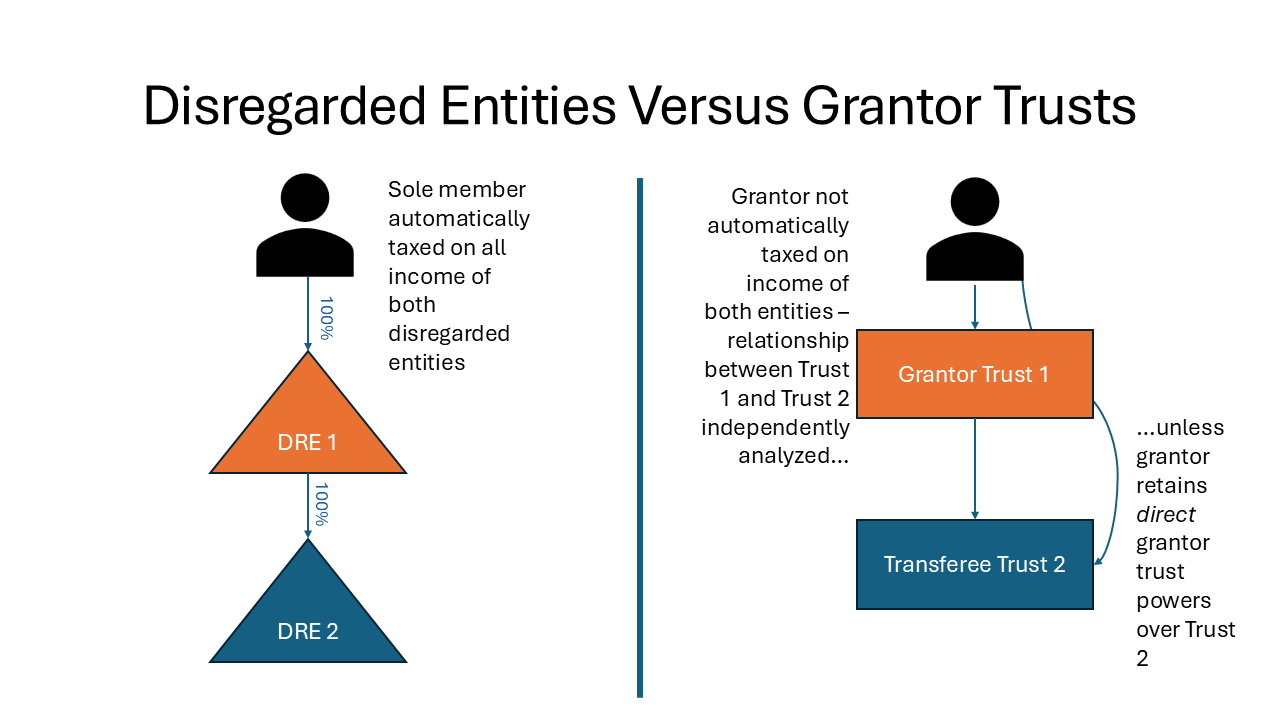
A grantor trust operates by transferring assets into a trust while allowing the creator to maintain specific rights or powers.
Step-by-Step Process
- Trust Creation
The grantor works with an estate attorney to draft the trust agreement. - Funding the Trust
Assets are transferred into the trust. These may include:- Real estate
- Stocks and bonds
- Business interests
- Cash
- Life insurance policies
- Trust Management
A trustee manages the assets according to the trust terms. - Tax Treatment
Income generated by the trust is taxed to the grantor. - Distribution
Assets or income may be distributed to beneficiaries according to the trust agreement.
The unique feature is that the grantor remains responsible for taxes even if they do not directly receive the income.
Key Features of Grantor Trusts
Grantor trusts contain specific characteristics that distinguish them from other trust structures.
1. Grantor Pays the Taxes
One defining feature is that the grantor is responsible for paying taxes on trust income.
Interestingly, this can actually increase the value of the trust for beneficiaries because trust assets grow without being reduced by taxes.
2. Retained Powers
A grantor trust may allow the creator to retain powers such as:
- Replacing trustees
- Borrowing from the trust
- Changing beneficiaries
- Controlling investments
These retained powers trigger grantor trust status under IRS rules.
3. Estate Planning Strategy
Many estate planners use grantor trusts to transfer wealth while reducing estate taxes.
Types of Grantor Trust Structures
Several trust structures fall under the category of grantor trusts.
Revocable Living Trust
This is the most common type.
The grantor can change or revoke the trust during their lifetime.
Benefits include:
- Avoiding probate
- Maintaining privacy
- Simplifying asset distribution
However, assets remain part of the taxable estate.
Irrevocable Grantor Trust
In this structure, the trust cannot easily be changed.
However, certain powers retained by the grantor make it a grantor trust for tax purposes.
This can create powerful tax planning opportunities.
Intentionally Defective Grantor Trust (IDGT)
Despite the unusual name, an IDGT is a sophisticated estate planning strategy.
It intentionally triggers grantor trust tax rules while removing assets from the grantor’s taxable estate.

Taxation Rules for Grantor Trusts
The taxation of a grantor trust is unique and often misunderstood.
Income Tax Treatment
Instead of the trust paying taxes, the grantor reports income on their personal tax return.
This includes:
- Interest income
- Dividends
- Capital gains
- Rental income
IRS Rules
The IRS considers a trust a grantor trust if the grantor retains certain powers, such as:
- Reversionary interests
- Administrative powers
- Power to control beneficial enjoyment
These provisions are outlined in Sections 671–679 of the Internal Revenue Code.
Tax Advantage
Although it may seem unfair to pay taxes on assets you no longer control, it actually benefits beneficiaries because the trust grows tax-free from its own assets.
Grantor Trust vs Non-Grantor Trust
Understanding the differences between these trust types is essential.
| Feature | Grantor Trust | Non-Grantor Trust |
|---|---|---|
| Taxpayer | Grantor | Trust itself |
| Tax rates | Personal income rates | Higher trust tax rates |
| Control | Grantor retains powers | Limited grantor control |
| Estate tax | Often excluded | Depends on structure |
Non-grantor trusts file their own tax returns and often face higher tax brackets.
Advantages of Using a Grantor Trust
A grantor trust offers several powerful benefits.
1. Estate Tax Reduction
Assets transferred to certain irrevocable grantor trusts may be removed from the grantor’s taxable estate.
2. Tax-Free Growth for Beneficiaries
Because the grantor pays taxes, trust assets grow without tax deductions.
3. Probate Avoidance
Trust assets generally bypass probate court, making inheritance faster and more private.
4. Asset Protection
Trust structures can protect assets from creditors and lawsuits.
5. Flexible Wealth Transfer
Grantor trusts allow families to transfer businesses, property, and investments efficiently.

Potential Drawbacks and Risks
Despite the benefits, grantor trusts are not perfect.
Tax Burden
The grantor must pay taxes on trust income.
For high-earning trusts, this can be significant.
Complexity
Trust law is complicated and often requires legal and financial advisors.
Irrevocability
Many tax-efficient grantor trusts cannot easily be modified once created.
Real-Life Examples of Grantor Trust Planning
Let’s explore how grantor trusts work in practice.
Business Owner Example
A successful entrepreneur owns a company worth $10 million.
By placing shares into an intentionally defective grantor trust, future growth in company value transfers to heirs without additional estate taxes.
Real Estate Investor Example
A property investor moves rental properties into a grantor trust.
Rental income is taxed to the grantor, but appreciation benefits heirs directly.

Personal Background: Who Uses Grantor Trust Strategies?
Grantor trusts are commonly used by individuals with substantial assets or complex financial structures.
Typical Users
These trusts are often used by:
- Entrepreneurs
- Real estate investors
- Family business owners
- High-net-worth families
- Professional athletes and celebrities
For example, many tech founders use grantor trusts when transferring pre-IPO shares to family members.
Financial Insights
Estate planning experts estimate that wealthy families can save millions in estate taxes through strategic trust planning.
According to the Federal Reserve, households with more than $10 million in net worth are far more likely to use advanced trust structures.
Setting Up a Grantor Trust
Creating a grantor trust involves several steps.
Step 1: Hire an Estate Attorney
Trust documents must follow specific legal standards.
Step 2: Draft the Trust Agreement
The agreement defines:
- Trustee powers
- Beneficiaries
- Distribution rules
Step 3: Transfer Assets
Funding the trust is essential.
Assets commonly transferred include:
- Investment portfolios
- Real estate
- Business equity
- Cash accounts
Step 4: Maintain Compliance
Trusts require ongoing management, accounting, and tax reporting.
Common Mistakes in Trust Planning
Many individuals make costly errors when setting up trusts.
Not Funding the Trust
Creating a trust without transferring assets makes it ineffective.
Choosing the Wrong Trustee
The trustee must be reliable and financially knowledgeable.
Ignoring Tax Implications
Improper planning can trigger unexpected tax liabilities.
FAQ
What is a grantor trust?
A grantor trust is a trust where the creator retains certain powers, causing the IRS to treat the grantor as the owner for income tax purposes.
Why do people create grantor trusts?
People create grantor trusts to manage assets, reduce estate taxes, and transfer wealth efficiently to heirs.
Does a grantor trust avoid estate taxes?
In some cases, yes. Certain irrevocable grantor trusts can remove assets from the grantor’s taxable estate.
Who pays taxes on a grantor trust?
The grantor is responsible for paying taxes on income generated by the trust.
Can a grantor trust be revoked?
Some grantor trusts, such as revocable living trusts, can be changed or revoked. Others are irrevocable.
Is a grantor trust the same as a revocable trust?
Not always. While most revocable trusts are grantor trusts, not all grantor trusts are revocable.
What assets can be placed in a grantor trust?
Assets may include real estate, stocks, business interests, insurance policies, and cash.
Do grantor trusts protect assets from creditors?
Some irrevocable grantor trusts can provide asset protection depending on jurisdiction and trust structure.
Conclusion
Estate planning isn’t just for the ultra-wealthy—it’s about protecting what you’ve worked hard to build. A grantor trust offers a flexible and powerful way to manage assets, reduce taxes, and ensure wealth transfers smoothly to the next generation.
By understanding how these trusts function, individuals and families can make more informed financial decisions. Whether you’re a business owner planning succession, a real estate investor protecting assets, or simply someone who wants to simplify inheritance for loved ones, the right trust strategy can make a meaningful difference.
Because trust laws and tax rules can be complex, working with experienced estate planners and tax professionals is essential. With the right guidance, a well-structured grantor trust can become one of the most valuable tools in a long-term financial plan.